
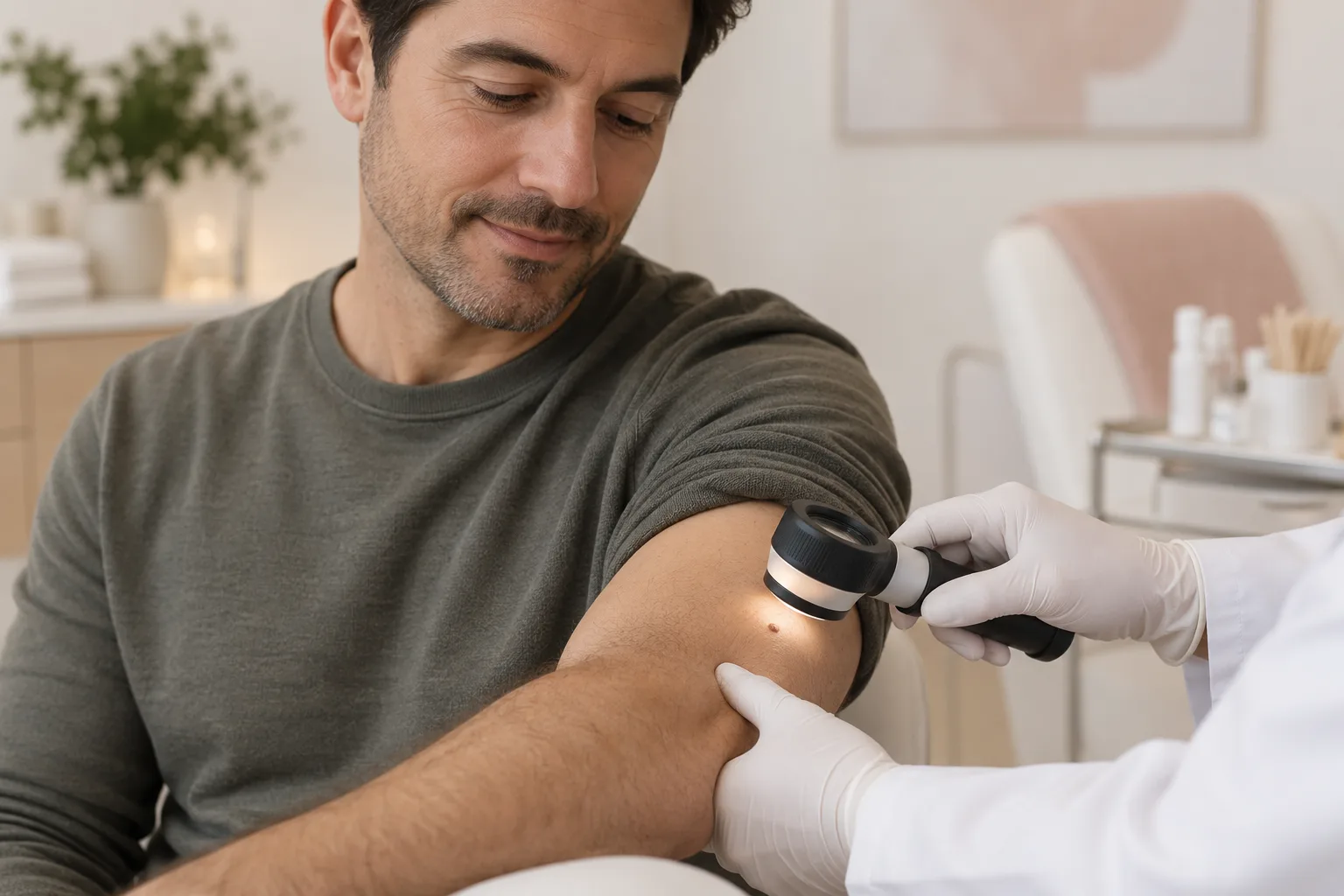
What is dermoscopy?
Dermoscopy uses a handheld instrument with light and magnification to examine structures and colours within a skin lesion. It complements a visual examination and helps decide whether a mole needs observation or further investigation. It does not remove or treat a mole.
When should a mole be checked?
Arrange an examination for a new or changing lesion, unexplained bleeding, or a mole that looks different from the others. Discuss surveillance if you have many moles or a personal or family history of skin cancer. Do not wait for a routine appointment when a concerning change appears.
Preparing for your appointment
Bring previous photographs and any pathology reports, and explain when you noticed the change. The dermatologist may recommend documentation, follow-up or a biopsy. The interval between examinations depends on your individual findings rather than a fixed schedule.
What are its limitations?
Dermoscopy supports clinical judgement but cannot rule out every skin cancer. A suspicious lesion may require tissue sampling and laboratory examination. A photograph alone is not enough to confirm that a changing mole is harmless.
Frequently asked questions
Does the examination hurt?
The instrument examines the skin without cutting it. A biopsy, if needed, is a separate procedure.
Must every mole be removed?
No. Some lesions can be monitored; removal depends on their features and your risk assessment.
Consultation in Çekmeköy
To discuss suitable options at our clinic in Taşdelen, Çekmeköy, Istanbul, request a consultation.
This information does not replace an examination. Suitability and follow-up are determined individually.
