
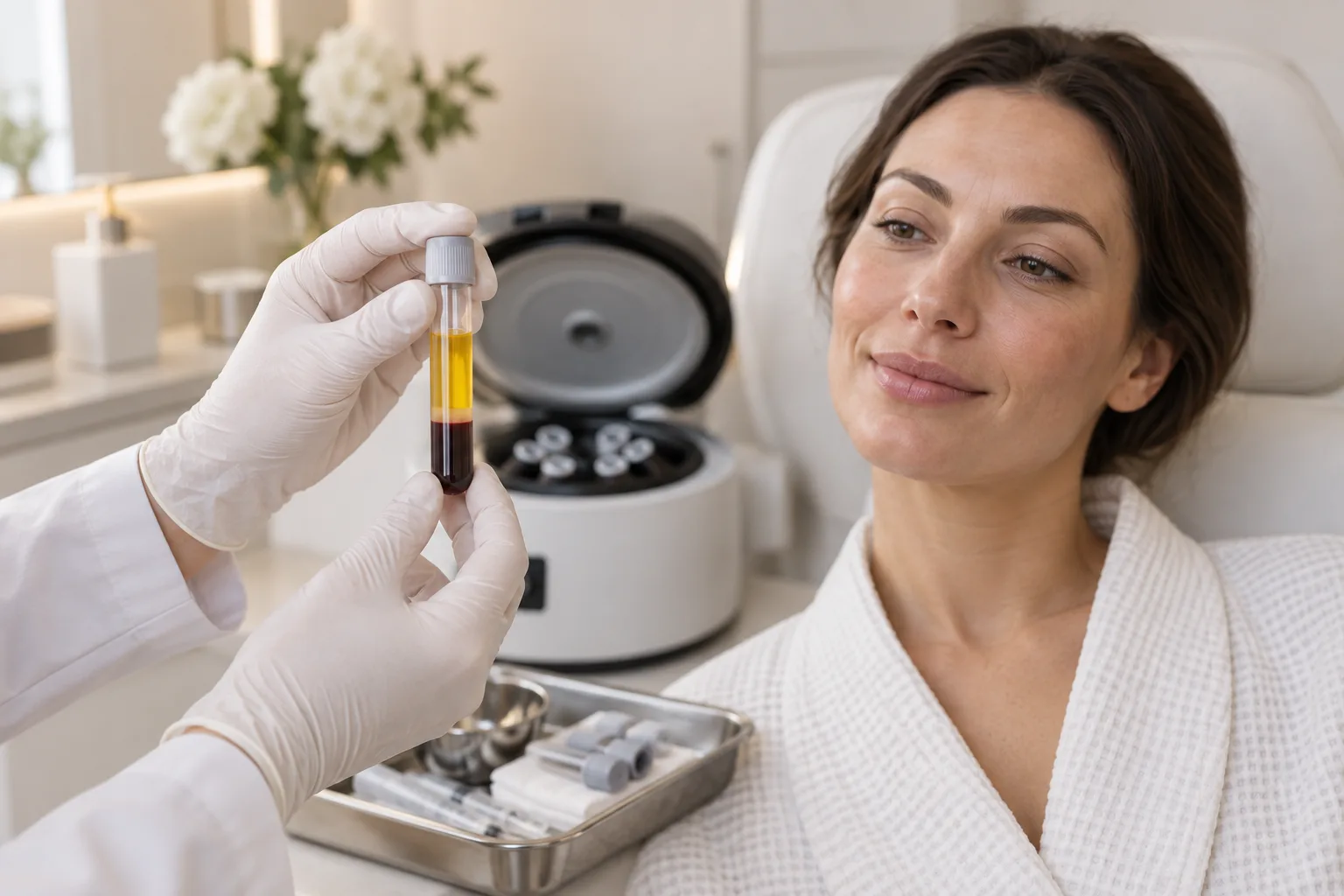
What is PRP?
Platelet-rich plasma is prepared by separating a sample of your own blood to obtain a platelet-enriched fraction. It is not a stem-cell treatment and should not be expected to address every hair or skin concern on its own.
PRP and hair loss
It may be considered as an additional option for selected cases of hereditary hair loss. Diagnosis comes first. Sudden shedding, scalp inflammation and scarring hair disorders need different approaches; PRP does not automatically replace established medical treatment.
What about skin appearance?
Research has explored skin appearance and some scars, but preparation methods and outcomes vary. Evidence is not equally strong for all proposed uses. Discuss a specific goal, realistic expectations and how response will be assessed rather than relying on a promise of rejuvenation.
Preparation and risks
Your clinician should review blood disorders, medicines and infection history. Sterile preparation matters. Injection-site pain, bruising and swelling may occur, and infection is possible. Using your own blood does not make treatment risk-free. Response guides decisions about continuing sessions.
Frequently asked questions
Does PRP create new hair follicles?
It is not a hair transplant and should not be presented as restoring every lost hair.
When can the outcome be assessed?
Follow-up depends on the goal. Comparing findings with a documented baseline is more useful than judging an immediate change.
Consultation in Çekmeköy
To discuss suitable options at our clinic in Taşdelen, Çekmeköy, Istanbul, request a consultation.
This information does not replace an examination. Suitability and follow-up are determined individually.
