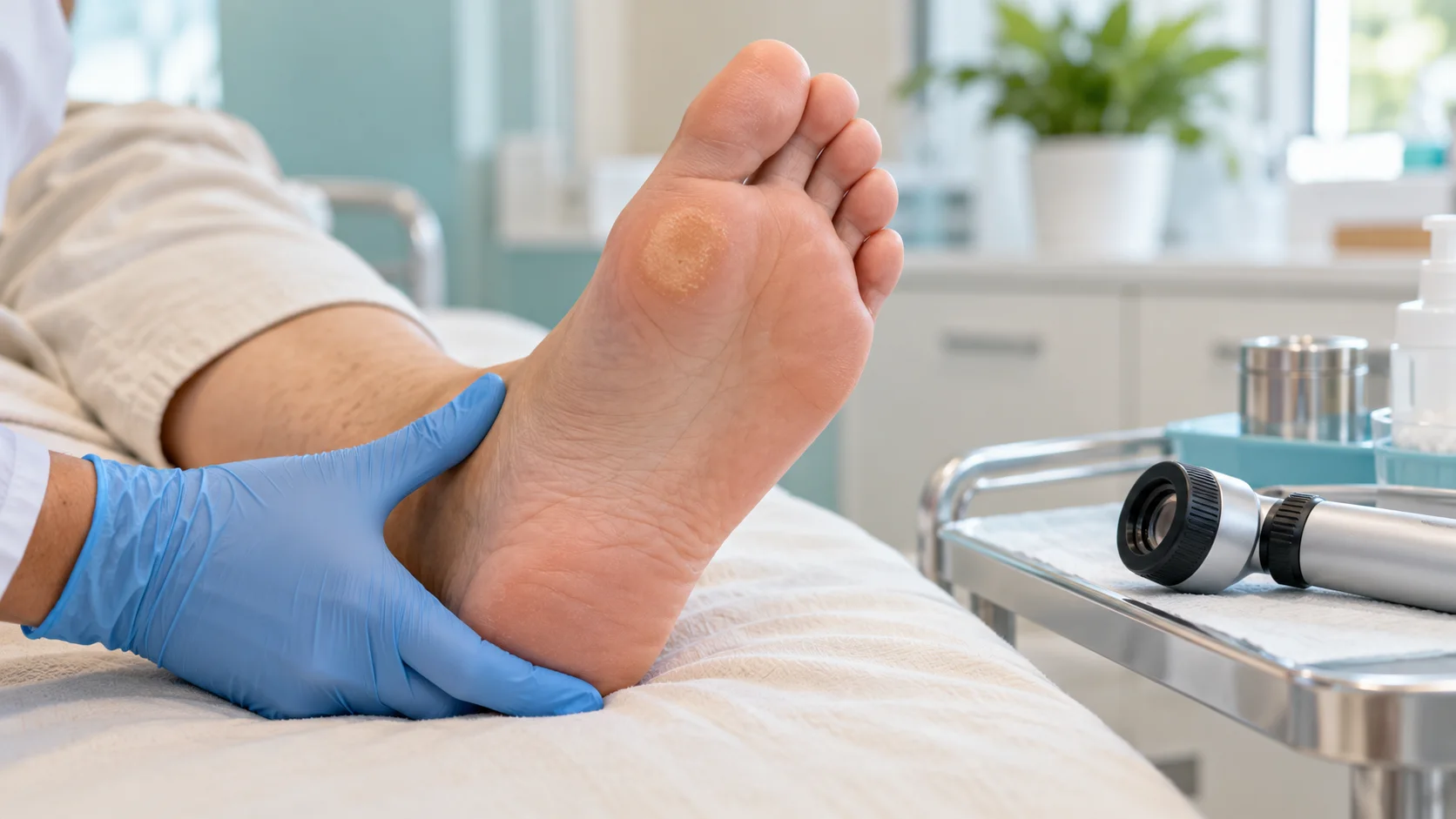
A hard patch on the bottom of your foot can make every step uncomfortable. It is easy to assume it is a corn or callus, especially when it sits beneath a thick layer of skin. A plantar wart can look similar, though its cause and treatment are different. Identifying the problem is more useful than choosing a product based on appearance alone.
These clues cannot confirm a diagnosis at home, and a photograph may not show enough detail. An unexplained or changing lesion deserves an examination before treatment.
What causes these conditions?
A plantar wart, also called a verruca, develops when certain types of human papillomavirus (HPV) infect the skin. The virus can enter through tiny breaks. Warts may spread through contact with affected skin or contaminated surfaces. Some appear individually; others form closely grouped patches.
Corns and calluses develop in response to repeated pressure or friction. They are not contagious. Footwear, foot shape and the way weight is distributed can contribute. A callus is usually a broader area of thickened skin. A corn is more concentrated and may have a firm central core. Both can occur where the foot experiences repeated loading.
What might the surface reveal?
A wart may have a rough surface with small dark or reddish dots. These relate to tiny blood vessels, rather than “roots” or seeds. Corns and calluses may look more evenly thickened, although their appearance varies. The absence of dots does not rule out a wart, and a dark mark alone does not establish the diagnosis.
Normal skin lines often continue across a callus or corn but may be interrupted within a wart. Thick overlying skin can hide this detail. A wart may also have callus-like skin around it, so the two appearances can overlap.
Does the type of pain help?
Direct pressure can make a corn sore, while pressure from the sides may be particularly uncomfortable with a wart. However, a wart may also hurt when you stand on it, and some warts cause no pain. This is a clinical clue rather than a reliable squeeze test. Do not repeatedly press, pierce or cut the area to investigate it.
Before an appointment, note when the patch appeared, whether it has changed and whether new patches have developed. Bring the names of products you have tried.
Safe steps while waiting for assessment
Avoid cutting hard skin with a blade, scissors or nail clippers. Do not pick at the lesion. Corn plasters, wart acids and freezing products can damage surrounding skin when used incorrectly or on the wrong condition. Check suitability before starting treatment, particularly if you are uncertain what the lesion is.
Choose comfortable shoes that do not rub. If a wart is possible, avoid sharing towels, socks or shoes, and wear footwear around communal showers and pools. Wash your hands after touching the area. Do not use a file or pumice stone used on a wart elsewhere on your skin.
When should you seek medical advice?
People with diabetes, reduced circulation, numbness in their feet or a weakened immune system should seek advice rather than treating a suspected wart or corn themselves. Reduced sensation can make an injury easy to miss. Lack of pain does not mean a foot problem is safe to ignore.
Arrange assessment if a lesion bleeds without an obvious injury, changes colour or shape, grows quickly, becomes an open sore, produces discharge or interferes with walking. Increasing redness, warmth, swelling or fever calls for prompt medical attention. A new wound or suspected infection in someone with diabetes should not wait for a routine appointment.
Treatment depends on the diagnosis
For a corn or callus, reducing pressure is central to care. Footwear changes, suitable cushioning and professional treatment may be considered. Removing thick skin without addressing the pressure can leave the underlying problem unresolved.
Wart management may involve observation, an appropriate salicylic acid preparation or an office procedure such as cryotherapy. Freezing can cause pain, blistering and pigment changes, and repeat visits may be needed. No approach guarantees clearance or prevents recurrence. Read the clinic’s cryotherapy information (https://drvolkantektas.com/en/hizmetler/kriyoterapi) for an overview; suitability requires individual assessment.
For children, the decision also considers comfort and tolerance of treatment. Many warts clear naturally over time. Pain, spread and disruption to daily activities may influence whether treatment is worthwhile. Do not assume that an adult product or painful procedure is appropriate for a younger child.
Frequently asked questions
Can a callus turn into a wart?
They have different causes. A change in what you can see may reflect an initially mistaken identification or overlapping features, and warrants reassessment.
Do black dots prove it is a wart?
No. They can be a useful clue, but the whole lesion needs assessment. Never cut the skin to look for them.
Will one treatment be enough?
That cannot be promised. The diagnosis, lesion characteristics and response determine the next steps.
For an assessment in Çekmeköy/Taşdelen, you can request a dermatology appointment at Dr. Volkan Tektaş’s clinic. This article provides general information and does not replace individual diagnosis or treatment.
