
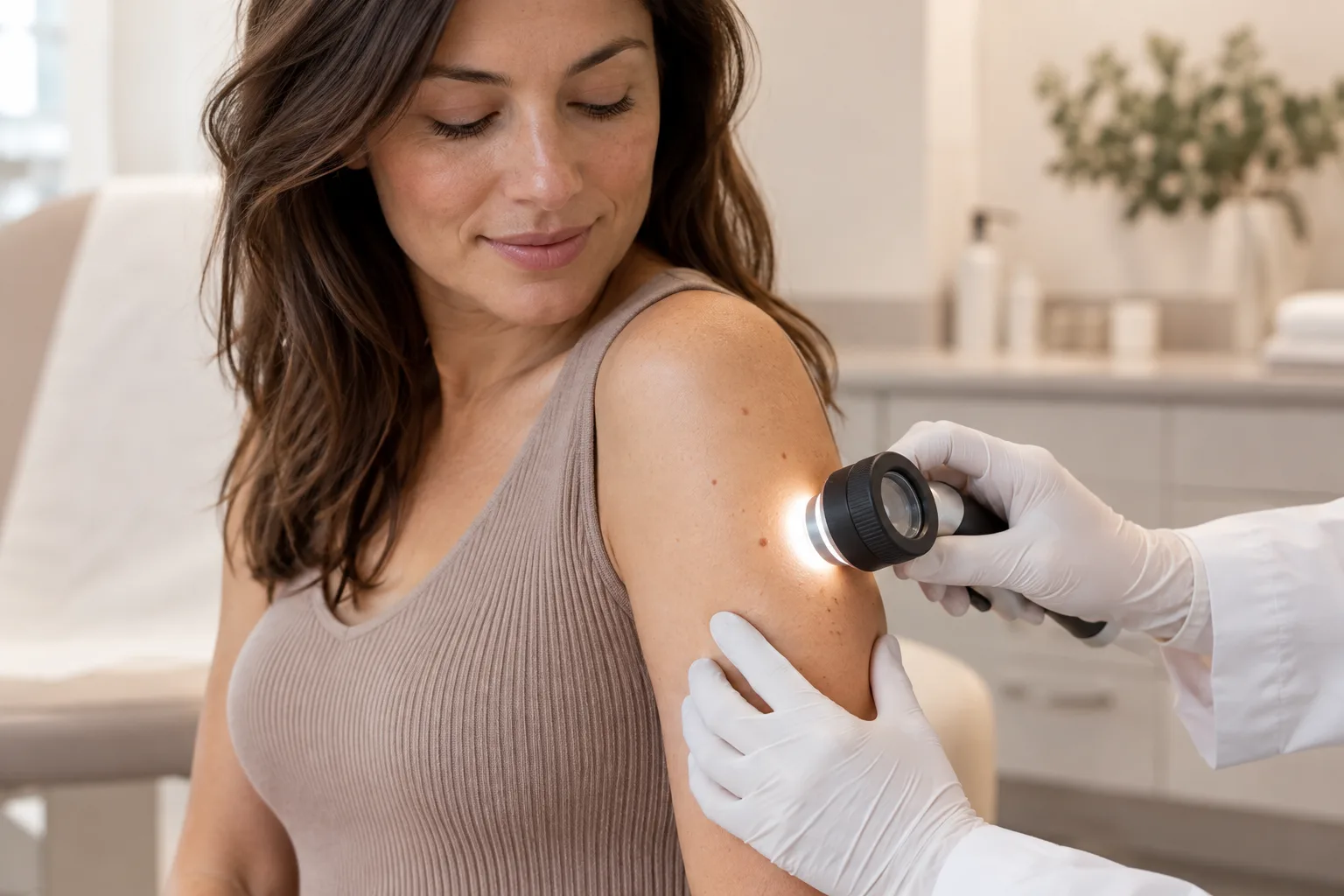
A mole that looks different from an older photograph can provide useful information at a consultation. Monitoring involves changes over time, not just the number or size of moles. Comparing your skin with pictures online cannot reliably answer whether a particular mole is harmless.
Which changes should be assessed?
Asymmetry, irregular borders, multiple colours or growth may need assessment. Show a dermatologist a spot that looks unlike your other moles, changes, itches or bleeds. Small size alone is not reassuring, and one of these signs does not by itself establish a cancer diagnosis.
What does dermoscopy do?
Dermoscopy uses lighting and magnification to examine structures at the skin surface. It helps the clinician assess colours and patterns in greater detail. Findings may lead to monitoring, further investigation or a tissue sample. Dermoscopy does not replace a pathology examination when one is needed.
Preparing for your appointment
Record when you noticed the spot, how quickly it changed and any symptoms. Older photographs with known dates may help comparisons. Bring previous mole removal and pathology reports if available, and mention a family history of skin cancer. Present medical records at the consultation rather than uploading them to open enquiry forms.
Does everyone need the same follow-up interval?
The timing depends on personal history and examination findings. Tell the clinic about a new change even if your next visit is already scheduled for a later date. Ask which changes require an earlier assessment and how any recorded images will be compared.
Mole assessment in Çekmeköy
Read about dermoscopy and mole examination. To arrange a visit in Taşdelen, Çekmeköy, Istanbul, use the contact page and review the appointment FAQs. This article cannot diagnose a skin change or replace an examination.
