
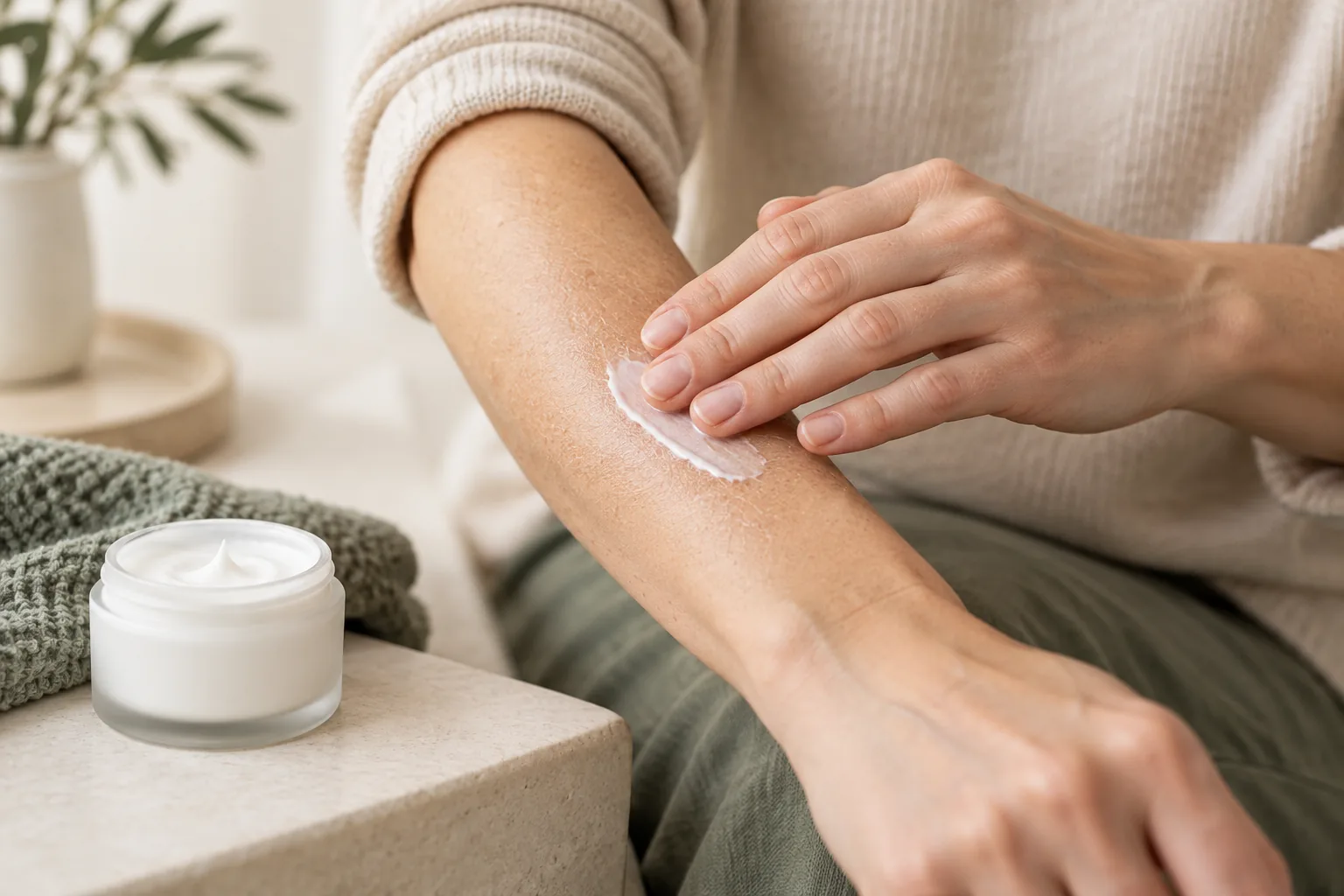
Itching and flaking can happen with both dry skin and eczema. How long symptoms last, where they appear and whether they keep coming back can help explain the cause. Appearance alone doesn't always tell you what's behind them.
What causes dry skin?
Cold, dry weather, frequent washing and contact with soaps and detergents can all dry out the skin. When its outer layer can't retain enough moisture, the surface can become rough and cracked. Some skin conditions can also contribute to dryness, alongside everyday habits.
What's the difference between dry skin and eczema?
Dry skin may look rough or dull, with fine flakes, itching or cracks. As dryness worsens, the skin can become more irritated. Itching alone isn't enough to diagnose eczema.
There are several types of eczema. With atopic dermatitis, a common type, dry, itchy patches may settle down and then flare up again. Repeated scratching can gradually thicken the skin. The rash can also look different depending on skin tone: it may appear red on lighter skin, or brown, purple or grey on darker skin. A lack of obvious redness doesn't rule out eczema.
If symptoms started after a new product
Tell your dermatologist if you noticed changes after starting a new cream, soap or detergent. In contact dermatitis, a substance touching the skin can cause irritation or an allergic reaction. The hands and face are commonly affected. Frequent contact with water can also add to irritation.
Symptoms starting around the same time as a new product can be a useful clue. To understand the cause, your dermatologist will also consider the ingredients and what your skin has been exposed to. Contact dermatitis isn't always an allergy: soaps and detergents can irritate the skin directly.
What can help with everyday care?
A gentler washing routine and regular moisturising may help relieve dryness:
- Use lukewarm water and keep showers to 5–10 minutes. Pat your skin gently with a towel rather than rubbing it
- Choose a gentle, fragrance-free cleanser. Avoid using extra product just to create more lather
- Apply moisturiser after a shower or washing your hands, while your skin is still slightly damp. Reapply during the day when your skin feels dry
- For very dry skin, a cream or ointment may be more suitable than a lotion. If a product causes burning or irritation, discuss it with your dermatologist
- Wear a soft cotton layer under fabrics that irritate your skin, such as wool. Protect your hands with suitable gloves when washing dishes or cleaning
Make moisturising part of your daily routine, rather than waiting until your skin feels very dry. If symptoms continue despite regular care, see a dermatologist.
When should you see a dermatologist about itching?
Book an appointment if dryness or a rash persists, keeps coming back or causes severe symptoms. Be sure to mention if itching interrupts your sleep.
As well as examining your skin, your dermatologist will ask when symptoms began and what makes them worse. Eczema may need treatment alongside moisturisers. Your treatment and follow-up plan will depend on the examination and your individual needs.
Don't wait if you notice these changes
Seek a medical assessment the same day if an area of eczema or a rash develops any of the following:
- New blisters, weeping, pus-filled spots or noticeable crusting
- Pain, swelling or warmth to the touch
- Sudden worsening or rapid spreading of the rash
- A fever or feeling generally unwell
These signs can point to an infection or a more serious problem. Crusting doesn't always mean infection, but don't delay getting help while trying to work out the cause at home.
Getting ready for your appointment
Make a list of your skincare products, medicines and treatments you've already tried. If symptoms come and go, dated photographs may help. Your dermatologist will also want to know where the problem started, what makes it worse and whether you have any allergies. For more on preparing for a visit, see the skin examination and dermatological assessment page.
Is dry skin always eczema?
No. Weather and everyday habits can dry out the skin. Dryness can also occur alongside some skin conditions, so persistent symptoms should be assessed.
Is eczema contagious?
Atopic eczema isn't contagious. However, skin affected by eczema can become infected. New weeping, pain or fever needs prompt medical attention.
If moisturiser helps, does that mean it's just dry skin?
No. Moisturisers can help both dry skin and atopic dermatitis. Feeling better after using one doesn't, by itself, explain the cause of your symptoms.
Does everyone with eczema need allergy tests?
No. Your symptom history and a skin examination may be enough to make a diagnosis. Whether further tests are needed depends on the suspected type of eczema and the examination findings.
This article provides general information. It doesn't replace a medical consultation, diagnosis or an individual treatment plan.
